Introduction
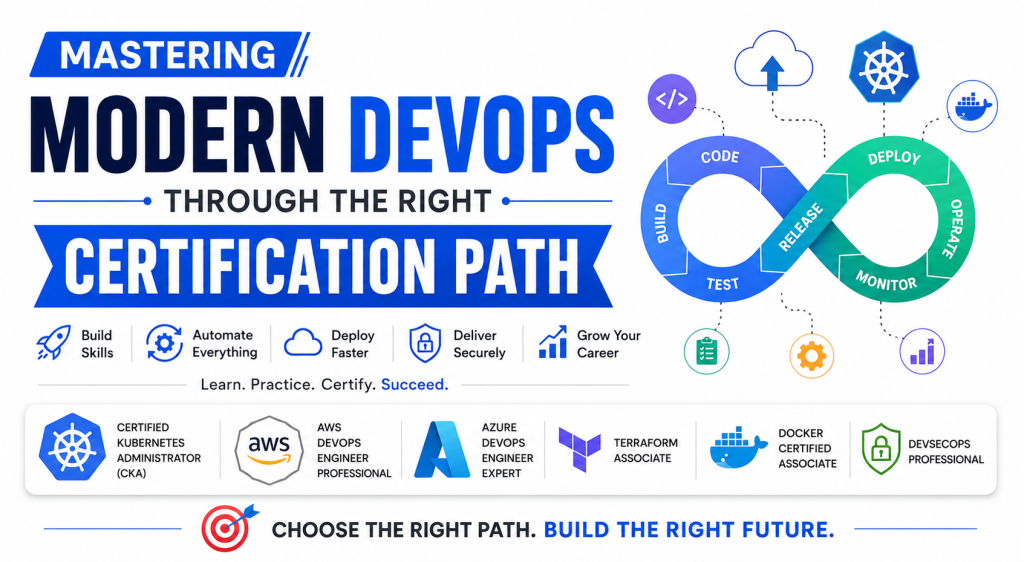
DevOps has become one of the most important skill domains in modern IT and cloud engineering. Organizations are rapidly moving toward automation, cloud-native infrastructure, Kubernetes, Infrastructure as Code, CI/CD pipelines, and platform engineering practices. Because of this shift, companies now look for engineers who can automate deployments, manage scalable infrastructure, improve release reliability, and accelerate software delivery.
However, choosing the right DevOps certification is not easy anymore. There are hundreds of certifications covering Docker, Kubernetes, Terraform, AWS, Azure, Jenkins, DevSecOps, monitoring, GitOps, and Site Reliability Engineering. Many learners start with advanced technologies too early and eventually feel overwhelmed.
One of the biggest mistakes beginners make is collecting certifications randomly without following a structured DevOps learning path. A Kubernetes certification may look attractive, but without Linux, networking, Git, and CI/CD fundamentals, it becomes difficult to understand real-world DevOps engineering workflows.
Modern DevOps is no longer limited to automation scripts. Today’s DevOps engineers work with cloud platforms, container orchestration, Infrastructure as Code, observability systems, security automation, monitoring pipelines, and reliability engineering practices. Certifications now reflect this evolving engineering landscape.
This guide simplifies the entire DevOps certification roadmap. Whether you are a fresher, Linux administrator, cloud engineer, developer, or operations professional, this article will help you choose the best DevOps certification path based on your experience level, career goals, and long-term industry demand.
Why DevOps Certifications Matter
DevOps certifications are valuable because they provide structured learning, practical engineering knowledge, and industry-recognized skill validation.
Many professionals try learning DevOps randomly from tutorials and videos. While free learning resources are useful, certifications often provide a more organized roadmap.
Major Benefits of DevOps Certifications
Structured Learning Path
Certifications help learners avoid confusion by providing a guided curriculum.
Instead of jumping directly into Kubernetes or Terraform, learners understand foundational concepts first.
Better Career Opportunities
Recruiters frequently use certifications to shortlist candidates for DevOps, cloud, Kubernetes, and automation roles.
Certifications can improve interview opportunities, especially for:
- Freshers
- Career switchers
- Internal promotions
- Freelancers
- Cloud transition roles
Real-World Engineering Exposure
Good DevOps certifications focus heavily on:
- CI/CD pipelines
- Infrastructure automation
- Kubernetes deployments
- Monitoring
- Cloud-native applications
- Security automation
Industry Demand
Modern organizations increasingly rely on:
- Kubernetes
- Cloud platforms
- Infrastructure as Code
- DevSecOps
- GitOps
- Observability
- Platform engineering
This demand continues to increase across startups, enterprises, fintech, SaaS companies, healthcare platforms, and AI infrastructure providers.
Salary Growth
Engineers with practical DevOps skills often move into higher-paying roles because they directly impact infrastructure scalability, release velocity, reliability, and automation efficiency.
Who Should Read This Guide
This guide is useful for multiple technical backgrounds.
Freshers Entering DevOps
Beginners who want a clear DevOps engineer roadmap can use this guide to avoid learning technologies in the wrong order.
Developers Moving Into DevOps
Software engineers who want to understand CI/CD, Kubernetes, automation, and cloud infrastructure can benefit greatly.
Linux Administrators
Linux professionals already understand servers and operating systems, making DevOps a natural career progression.
Cloud Engineers
Cloud professionals can strengthen automation and deployment skills through DevOps certifications.
Kubernetes Engineers
Container orchestration specialists can build stronger platform engineering expertise.
DevSecOps Learners
Security-focused engineers can learn secure CI/CD pipelines, container security, and secrets management.
SRE Engineers
Reliability engineers can deepen knowledge around observability, incident management, monitoring, and automation.
Types of DevOps Certifications
Foundation Certifications
Foundation certifications introduce learners to DevOps culture, automation practices, Agile workflows, CI/CD, and collaboration principles.
These certifications are best for:
- Beginners
- Non-technical professionals
- Freshers
- IT support professionals
Common Foundation Certifications
- DevOps Foundation
- DevOps Practitioner
- Agile Foundations
Tool-Based Certifications
These certifications focus on individual DevOps tools.
Popular Tool Certifications
Docker Certification
Focuses on:
- Containers
- Image management
- Container networking
- Registry operations
- Multi-container applications
Kubernetes Certification
Focuses on:
- Cluster management
- Deployments
- Scaling
- Networking
- Security
- Troubleshooting
Terraform Certification
Focuses on:
- Infrastructure as Code
- Cloud automation
- State management
- Modular infrastructure
Jenkins Certification
Covers:
- CI/CD pipelines
- Pipeline automation
- Build orchestration
Git Certification
Covers:
- Version control
- Branching
- Collaboration workflows
Cloud DevOps Certifications
Cloud certifications combine DevOps practices with cloud-native engineering.
AWS DevOps Certification
Covers:
- CI/CD
- Cloud automation
- Monitoring
- Infrastructure provisioning
- Security
Azure DevOps Certification
Focuses on:
- Azure Pipelines
- Infrastructure automation
- Release management
Google Cloud DevOps Engineer
Focuses on:
- Reliability engineering
- Monitoring
- Kubernetes
- Cloud-native operations
DevSecOps Certifications
DevSecOps certifications focus on integrating security into DevOps workflows.
Topics Covered
- Container security
- Compliance automation
- Secure pipelines
- Vulnerability scanning
- Secrets management
- Security policies
SRE and Platform Engineering Certifications
These certifications emphasize reliability, scalability, monitoring, and operational excellence.
Key Areas
- Observability
- Monitoring
- Incident management
- Reliability engineering
- Capacity planning
- Service health
Advanced Certifications
Advanced DevOps domains are becoming increasingly important.
Specialized Areas
- GitOps
- MLOps
- AIOps
- FinOps
- Platform engineering
- Service mesh
- Cloud-native security
Best DevOps Certifications at a Glance
| Certification | Best For | Level | Difficulty | Main Skills | Career Scope |
|---|---|---|---|---|---|
| DevOps Foundation | Beginners | Beginner | Easy | CI/CD, DevOps basics | Entry-level DevOps |
| Docker Certified Associate | Container Engineers | Intermediate | Medium | Containers, Docker | DevOps, Cloud |
| Certified Kubernetes Administrator | Kubernetes Engineers | Advanced | High | Kubernetes administration | High industry demand |
| Terraform Associate | Infrastructure Automation | Intermediate | Medium | IaC, automation | Cloud DevOps |
| AWS Certified DevOps Engineer | AWS Engineers | Advanced | High | Cloud automation | Enterprise cloud roles |
| Azure DevOps Engineer Expert | Azure Engineers | Advanced | High | Azure CI/CD | Enterprise DevOps |
| Google Cloud DevOps Engineer | GCP Engineers | Advanced | High | Reliability engineering | Cloud-native operations |
| DevSecOps Certification | Security Engineers | Intermediate | Medium | Secure pipelines | DevSecOps roles |
| SRE Certification | Reliability Engineers | Advanced | High | Monitoring, observability | SRE roles |
Certification Deep Dive
1- DevOps Foundation
What It Is
A beginner-level certification introducing DevOps principles, Agile workflows, automation culture, and CI/CD basics.
Who Should Take It
- Beginners
- Freshers
- IT support professionals
- Developers entering DevOps
Best Career Fit
- Junior DevOps Engineer
- Automation Engineer
- Cloud Support Engineer
Difficulty Level
Beginner
Career Scope
Good starting point for DevOps fundamentals.
Skills You Will Learn
- DevOps lifecycle
- CI/CD basics
- Automation culture
- Agile workflows
- Collaboration models
- Infrastructure concepts
Tools Covered
- Git
- Jenkins
- Docker basics
Study Roadmap
- Learn Linux basics
- Understand Git
- Learn CI/CD fundamentals
- Practice automation concepts
- Study DevOps workflows
Real-World Use Cases
- CI/CD pipelines
- Automation workflows
- Agile delivery
Pros
- Beginner-friendly
- Structured introduction
- Good entry point
Cons
- Limited technical depth
- Not enough for advanced engineering roles
Best Recommendation
Ideal for complete beginners starting DevOps learning.
2- Certified Kubernetes Administrator
What It Is
A practical Kubernetes certification focused on cluster administration and troubleshooting.
Who Should Take It
- DevOps Engineers
- Cloud Engineers
- Platform Engineers
Best Career Fit
- Kubernetes Engineer
- Platform Engineer
- SRE Engineer
Difficulty Level
Advanced
Career Scope
Very high demand across cloud-native companies.
Skills You Will Learn
- Cluster setup
- Networking
- Scaling
- Security
- Storage
- Troubleshooting
- RBAC
- Monitoring basics
Tools Covered
- Kubernetes
- Helm
- kubectl
- Linux
- Containers
Study Roadmap
- Learn Docker
- Understand Linux networking
- Learn Kubernetes architecture
- Practice deployments
- Solve troubleshooting labs
Real-World Use Cases
- Production Kubernetes clusters
- Auto-scaling workloads
- Cloud-native applications
Pros
- Strong industry value
- Practical engineering skills
- Excellent cloud-native relevance
Cons
- Difficult for beginners
- Requires hands-on practice
Best Recommendation
Best for intermediate engineers moving toward cloud-native infrastructure roles.
3- Terraform Associate
What It Is
Infrastructure as Code certification focused on provisioning cloud infrastructure.
Who Should Take It
- Cloud engineers
- DevOps engineers
- Automation specialists
Best Career Fit
- Cloud Automation Engineer
- Infrastructure Engineer
- Platform Engineer
Difficulty Level
Intermediate
Skills You Will Learn
- Infrastructure as Code
- Terraform modules
- State management
- Cloud provisioning
- Automation workflows
Tools Covered
- Terraform
- AWS
- Azure
- GCP
- Git
Real-World Use Cases
- Automated infrastructure provisioning
- Multi-cloud environments
- Repeatable infrastructure deployment
Pros
- High practical value
- Strong automation focus
- Cloud-native relevance
Cons
- Requires cloud familiarity
Best Recommendation
Excellent certification for infrastructure automation careers.
4- AWS Certified DevOps Engineer
What It Is
Advanced AWS certification covering CI/CD, automation, monitoring, and infrastructure reliability.
Difficulty Level
Advanced
Best Career Fit
- AWS DevOps Engineer
- Cloud Infrastructure Engineer
- Automation Engineer
Skills You Will Learn
- AWS automation
- CI/CD
- Monitoring
- Infrastructure deployment
- Cloud security
- Scalability
Tools Covered
- AWS services
- CloudFormation
- Kubernetes
- Monitoring tools
Real-World Use Cases
- Enterprise cloud infrastructure
- CI/CD automation
- High-availability systems
Pros
- Strong enterprise demand
- Cloud-native depth
- Valuable for enterprise hiring
Cons
- Requires AWS experience
- Broad syllabus
Best Recommendation
Best for professionals already working with AWS environments.
DevOps Certification Comparison Table
| Certification | Best For | Level | Main Focus | Difficulty | Career Scope | Recommended Role |
|---|---|---|---|---|---|---|
| DevOps Foundation | Beginners | Beginner | DevOps basics | Easy | Moderate | Junior DevOps |
| Docker Certified Associate | Containers | Intermediate | Docker | Medium | High | Container Engineer |
| CKA | Kubernetes | Advanced | Kubernetes | High | Very High | Kubernetes Engineer |
| Terraform Associate | Automation | Intermediate | IaC | Medium | High | Cloud Automation |
| AWS DevOps Engineer | AWS DevOps | Advanced | Cloud automation | High | Very High | AWS DevOps Engineer |
| Azure DevOps Engineer | Azure DevOps | Advanced | Azure pipelines | High | High | Azure Engineer |
| GCP DevOps Engineer | GCP DevOps | Advanced | Reliability engineering | High | High | Cloud Reliability Engineer |
| DevSecOps Certification | Security | Intermediate | Secure pipelines | Medium | High | DevSecOps Engineer |
| SRE Certification | Reliability | Advanced | Observability | High | Very High | SRE Engineer |
DevOps Certification Roadmap
Beginner Path
Start with fundamentals.
Recommended Order
- Linux
- Git
- Networking basics
- Docker
- CI/CD fundamentals
- DevOps Foundation
Intermediate Path
Focus on automation and orchestration.
Recommended Technologies
- Jenkins
- Terraform
- Kubernetes
- Cloud basics
- Monitoring tools
Advanced Path
Move into production-grade engineering.
Recommended Certifications
- CKA
- AWS DevOps Engineer
- Azure DevOps Engineer
- DevSecOps
- SRE certifications
Specialized Path
Choose specialization based on career goals.
Advanced Domains
- GitOps
- Platform engineering
- MLOps
- Observability
- AIOps
- FinOps
Recommended Certification Path by Role
DevOps Beginner
Linux → Git → Docker → DevOps Foundation → Jenkins
Cloud Engineer
AWS/Azure Fundamentals → Terraform → Kubernetes → Cloud DevOps Certification
Kubernetes Engineer
Docker → Kubernetes → Helm → CKA → GitOps
Platform Engineer
Terraform → Kubernetes → GitOps → Platform Engineering
DevSecOps Engineer
Linux → CI/CD → Container Security → DevSecOps
SRE Engineer
Monitoring → Kubernetes → Reliability Engineering → Observability
Real-World Career Scenarios
Fresher Starting DevOps
A beginner should focus on Linux, Git, Docker, and CI/CD before moving toward Kubernetes.
Developer Learning Kubernetes
Developers benefit greatly from learning containers and deployment automation.
Sysadmin Moving Into Cloud Automation
Linux administrators can transition naturally into Terraform and cloud automation.
Cloud Engineer Transitioning Into DevOps
Cloud engineers should focus on CI/CD, Infrastructure as Code, and Kubernetes.
Operations Engineer Becoming SRE
Operations professionals can move into reliability engineering through monitoring and observability expertise.
Common Mistakes to Avoid
- Starting Kubernetes too early
- Ignoring Linux fundamentals
- Skipping networking concepts
- Learning tools without projects
- Collecting certifications only
- Ignoring cloud fundamentals
- Avoiding troubleshooting practice
- Depending entirely on tutorials
- Memorizing instead of practicing
- Ignoring monitoring and observability
Hands-On Projects
CI/CD Pipeline Setup
Build automated pipelines using Jenkins or GitHub Actions.
Dockerized Applications
Containerize applications for portability and scalability.
Kubernetes Deployment
Deploy scalable workloads on Kubernetes clusters.
Terraform Infrastructure
Provision cloud infrastructure automatically.
Monitoring Stack
Implement Prometheus and Grafana monitoring.
GitOps Workflow
Automate Kubernetes deployments using GitOps practices.
DevSecOps Pipeline
Integrate vulnerability scanning and secrets management.
Automated Infrastructure Setup
Build repeatable cloud infrastructure environments.
Tools and Free Learning Resources
Linux Labs
Practice Linux commands and shell scripting daily.
Git Practice
Use GitHub repositories for collaboration practice.
Docker Playground
Experiment with containers and images.
Kubernetes Labs
Use local clusters and sandbox environments.
Terraform Examples
Practice Infrastructure as Code templates.
Cloud Free Tier
Use AWS, Azure, or GCP free-tier environments.
Mock Tests
Attempt certification-style assessments regularly.
DevOps Interview Preparation
Practice troubleshooting, architecture, and scenario-based questions.
How to Choose the Right DevOps Certification
Choosing the wrong certification wastes both time and money.
Consider Your Current Skill Level
Beginners should not start directly with advanced Kubernetes certifications.
Define Career Goals
Your roadmap depends heavily on your target role.
Consider Budget
Some certifications are expensive and require renewal.
Understand Cloud Experience
Cloud-native certifications assume infrastructure familiarity.
Evaluate Time Availability
Advanced certifications require significant lab practice.
Focus on Industry Demand
Kubernetes, cloud automation, Terraform, and DevSecOps currently offer strong market demand.
Think Long-Term
Choose certifications that align with future growth areas like platform engineering and cloud-native infrastructure.
FAQs
1. Which DevOps certification is best for beginners?
DevOps Foundation is usually the best starting point because it introduces CI/CD, automation, Agile workflows, and DevOps culture without overwhelming beginners.
2. Is Kubernetes certification worth it?
Yes. Kubernetes skills remain highly valuable because many organizations run cloud-native infrastructure using Kubernetes clusters.
3. Which cloud certification is best for DevOps?
AWS Certified DevOps Engineer is one of the strongest options for enterprise cloud DevOps roles.
4. Is Terraform certification useful?
Yes. Infrastructure as Code skills are extremely important for modern cloud automation.
5. Do DevOps engineers need coding?
Basic scripting and automation knowledge is very important for DevOps careers.
6. How long does DevOps certification preparation take?
Preparation time varies depending on experience and certification difficulty.
7. Is Docker certification worth it?
Docker remains an important foundational technology for Kubernetes and cloud-native infrastructure.
8. Which certification is best for SRE roles?
SRE-focused certifications covering observability, monitoring, reliability, and incident management are highly valuable.
9. Which DevOps certification has highest salary value?
Advanced Kubernetes and cloud DevOps certifications generally provide strong salary growth opportunities.
10. Should beginners start with Kubernetes?
No. Beginners should first learn Linux, networking, Docker, and CI/CD fundamentals.
11. Is DevOps certification enough to get a job?
Certifications help, but practical projects and hands-on experience are equally important.
12. Which DevOps certification roadmap is best?
A strong roadmap usually follows Linux → Git → Docker → CI/CD → Terraform → Kubernetes → Cloud DevOps.
Final Recommendation
The best DevOps certification depends heavily on your current experience, technical background, and career goals. Beginners should avoid jumping directly into advanced Kubernetes or cloud certifications without building Linux, Git, networking, and automation fundamentals first. A roadmap-based learning approach works far better than randomly collecting certificates.
For most beginners, starting with Linux, Git, Docker, CI/CD basics, and a DevOps Foundation certification creates a strong base. Intermediate engineers should move toward Terraform, Kubernetes, and cloud automation certifications. Advanced professionals can specialize in Kubernetes administration, DevSecOps, Site Reliability Engineering, GitOps, platform engineering, or cloud-native reliability.
Modern DevOps careers increasingly revolve around automation, Kubernetes, Infrastructure as Code, observability, cloud-native engineering, and reliability engineering. Certifications can accelerate your growth, but real-world projects and hands-on troubleshooting remain the most important factors for long-term success.
The smartest strategy is to choose one roadmap, build projects consistently, practice cloud automation regularly, and develop production-level troubleshooting skills alongside certifications.
